What Kufunga Sells
An engagement, not a test.

One System, Several Deployment Environments
Kufunga has one intellectual property system rather than separate products invented for every market. What changes between an individual, a household, a company, a congregation and an organisation is which instruments apply, to whom, and what is done with the result.
An organisation does not simply purchase access to links. Kufunga scopes the engagement, determines which instruments apply to which participants, administers the diagnostic phase, interprets the results, identifies the priority intervention areas and delivers the appropriate development programme.
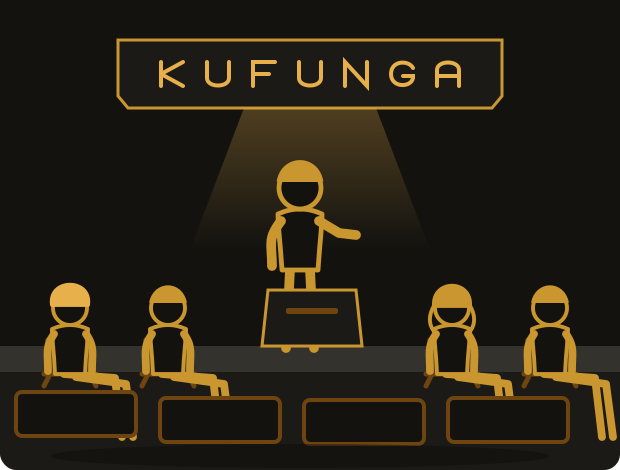
Five Settings
The emphasis shifts with the setting. The instruments do not.
Individuals
Kufunga becomes a personal diagnostic and development service. A person may arrive because of repeated conflict, stalled progress, poor decisions, financial behaviour, relationship difficulties, business problems, or simply because they want a structured examination of themselves.
The Foundation does not begin by assuming the cause. It measures first.
Families
The emphasis moves from individual pathology to the patterns that affect relationships, decision-making, responsibility and what is being transmitted through the household. Adults are assessed individually, followed by facilitated work around whatever appears relevant.
The purpose is not to produce a family score. It is to help each member understand what they are carrying into the family system.
Companies
The organisation can use Kufunga with executives, managers, employees and specific commercial teams. Patterns of fear, bitterness and insecurity influence leadership, delegation, conflict and culture. Dzungu exposes the decision disciplines that create avoidable rework, rushed implementation and repeated failure. Sales Fit establishes whether the people placed in revenue-generating roles actually match them.
What the company is buying is a form of human decision and performance risk management, followed by targeted development.
Churches And Faith-Based Organisations
The system can be offered to adult members, ministry teams and leadership. Authority, sincerity and spiritual commitment do not remove the human factors the instruments measure.
Kufunga helps leaders separate the spiritual or organisational issue they believe they are facing from the behavioural patterns contributing to it. The Foundation's role stays diagnostic and developmental rather than theological.
NGOs, PVOs, Foundations And Civil Society
Here Kufunga becomes a leadership, team and project-performance intervention. These organisations run on limited resources, demanding social objectives and complex stakeholder environments, where poor judgment, unresolved interpersonal patterns, repeated correction and wrong role placement consume what should be reaching beneficiaries.
It can be used with leadership teams, project managers, field teams and fundraising personnel.
Assessment, Interpretation, Diagnosis, Intervention, Reassessment
Five phases, in order. The invoice is not principally for the questions. It is for assessment, interpretation, intervention and measurable development.
Phase oneAssessment
Assessment
The relevant instruments are administered according to the individual, family, team or institution being examined. Which instruments apply is a scoping decision, not a fixed package.
Phase twoInterpretation
Interpretation
Results are considered together rather than as isolated numbers. The question is not what each score says on its own, but what pattern the instruments are collectively showing.
Phase threeDiagnosis
Diagnosis
Kufunga separates the presenting problem from the underlying issue. Apparent underperformance may be decision indiscipline, role misfit, unresolved fear, bitterness and insecurity, or a combination of them.
Phase fourIntervention
Intervention
The appropriate response is prescribed. The FBI framework moves into the guided programme, the Dzungu framework into Dedzungurization, and Sales Fit into development, coaching, recruitment or role placement.
Phase fiveReassessment
Reassessment
After the intervention the relevant instrument is administered again, so that Kufunga can establish whether behaviour has actually changed rather than assuming that it has.
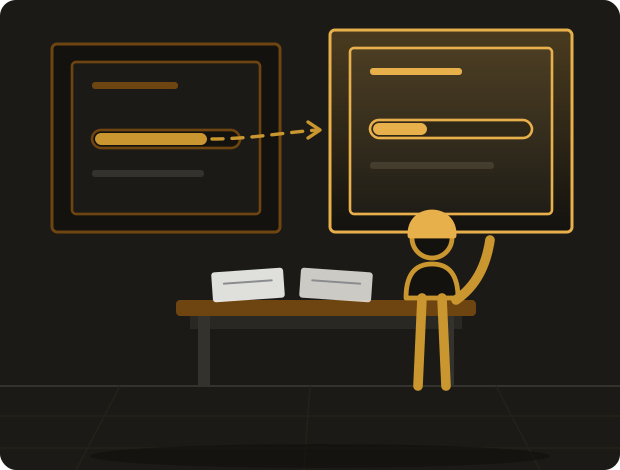
What Gets Prescribed
Where the FBI Virus Audit shows a pattern that has entered a person's conduct, the response is the guided programme: a guide who has been through it, a workbook to write in, and the person's own copy of the book. It is worked through rather than attended.
Where the Dzungu Index shows premature action, thin preparation or a repeat-failure loop, the response is Dedzungurization, the systematic descent down the band ladder from Severe through High, Moderate and Minor to Controlled. The Foundation runs it through qualified clinical and behavioural psychologists representing it.
Where the Sales Fit Audit shows the question is fit rather than effort, the response is a decision about the role itself, followed by development, coaching, recruitment or placement. Telling a badly fitted person to try harder is the most expensive thing an organisation can do with them.
After the intervention, the relevant instrument is administered again. That reassessment is the only honest evidence that anything changed.
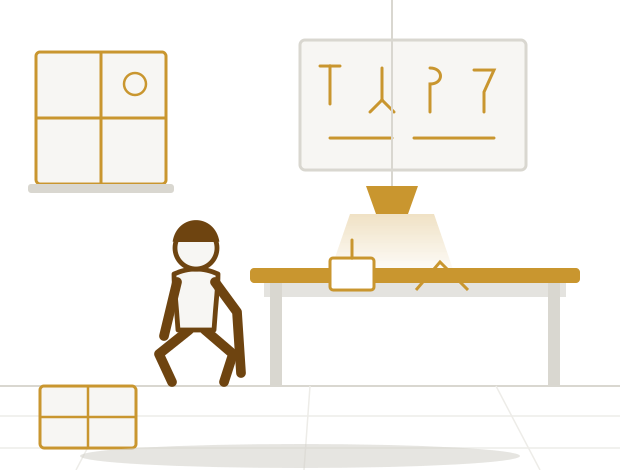
Kufunga Institutional Diagnostic Programme
For companies, churches, NGOs, foundations and civil-society organisations that want the diagnosis before the development spend.
The institutional output consists of individual confidential reports, intervention recommendations, and an institutional report showing aggregate patterns rather than casually exposing any individual's private result. Institutional deployment therefore requires a clear consent and reporting protocol agreed before the first instrument is administered, particularly because the public self-assessments carry different privacy and follow-up arrangements.
What the organisation then commissions is a targeted intervention, addressed to what the diagnosis actually found, rather than putting everybody through the same generic workshop.
The organisation is purchasing a form of human decision and performance risk management, followed by targeted development that can be measured at the end of it.

Tell Us What You Are Looking At
Scoping is a conversation before it is a quotation. Tell us who is being assessed, what the presenting problem looks like from where you sit, and what you would want to be different at the end of it. We will tell you which instruments apply and what the engagement involves.